
10 Things You Can Do to Make Your First Year of College a Success
- Samantha Herscher
- Jan 31
- 4 min read

Starting college is exciting, overwhelming, and full of possibilities. Your first year sets the tone for the rest of your college experience.
The good news? Success in college isn't just about acing exams, it's about building connections, taking care of yourself, finding balance, and learning who you are.
Here are 10 things you can do to make your first year of college a success.
1. Join a club
One of the fastest ways to find your people in college is to join a club or organization. Whether it's academic, cultural, recreational, or just plain fun, clubs give you an instant community of people who share your interests. Plus, they look great on your resume and give you leadership opportunities. Don't be afraid to try something completely new. College is the perfect time to explore interests you never had time for in high school.
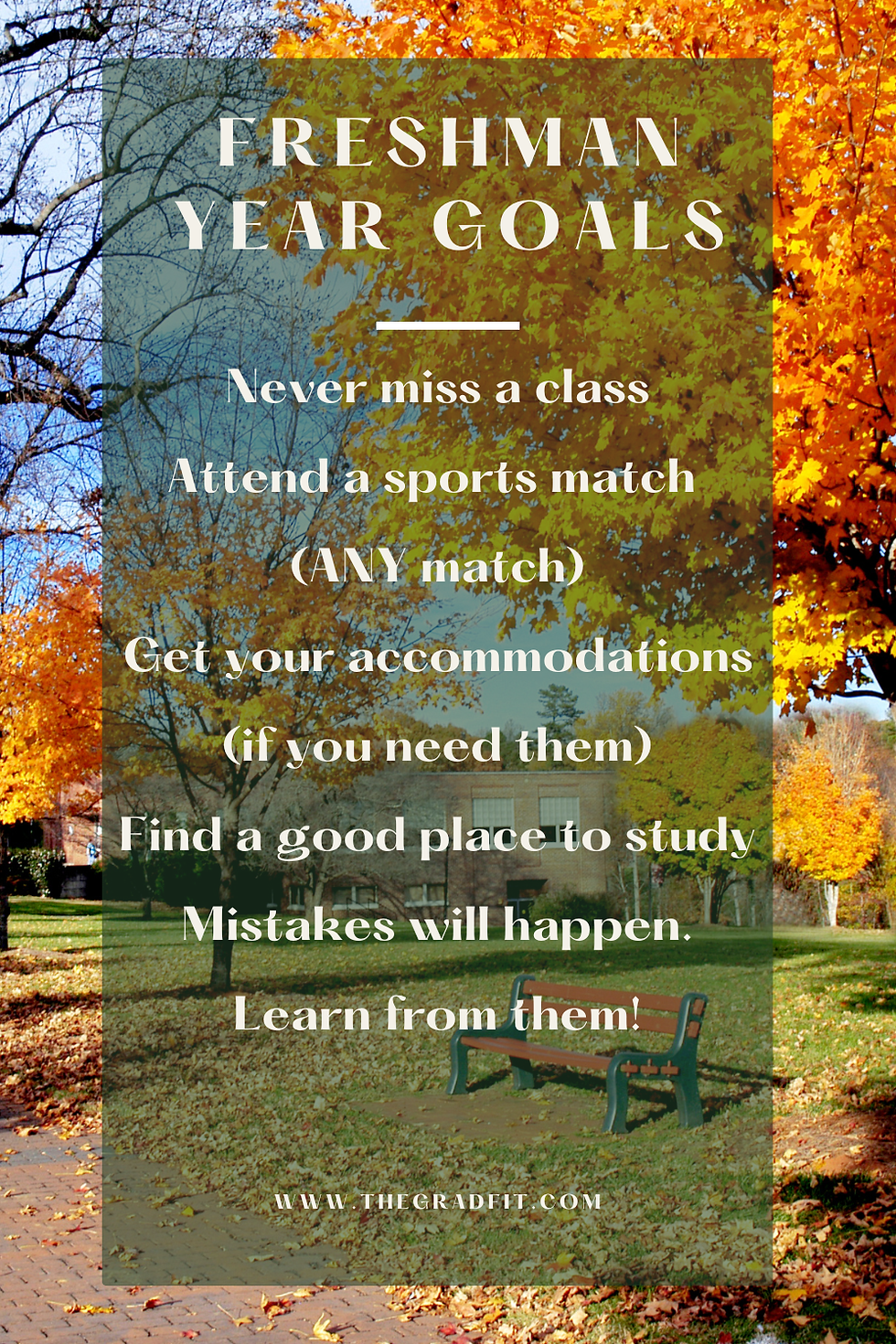
2. Attend a sports match—ANY match
You don't have to be a die-hard sports fan to enjoy the energy of a college game. Attend a football game, a squash match, a bowling competition, or whatever interests you. College sports create a sense of school spirit and community, and they're a fun way to spend time with friends. You might even discover a new sport you love watching (or playing!).
3. Go to your professors' office hours
This is one of the most underutilized resources on campus. Office hours aren't just for when you're struggling, they're for building relationships with professors, getting deeper insights into course material, discussing career paths, and seeking mentorship. Professors remember students who show up and engage. These connections can lead to research opportunities, strong recommendation letters, and valuable guidance throughout your college career.
4. Get outdoors and be physical
College students are in a critical stage where lifelong health habits are formed, yet physical activity often takes a backseat during the transition to college. The decline in physical activity after high school, combined with increasing rates of chronic diseases among college-aged students, makes this especially important.
Find ways to stay active that work for you: join an intramural team, hit the campus gym, go for walks or runs, try yoga, go hiking on weekends, or join a recreational sports club.
Not only does physical activity improve your physical health, but it's also crucial for managing stress, improving sleep, and supporting mental health.
5. Get your accommodations (if you need them)
Did you have a 504 plan or IEP in high school? You need to advocate for yourself to get those same accommodations in college. Search your college website for "Disability Services," "Accessibility Services," or "Student Access" and reach out to them early, preferably before classes even start.
Unlike high school, colleges won't automatically provide accommodations. You need to request them, provide documentation, and communicate with your professors. Don't wait until you're struggling. Getting the support you need from day one sets you up for academic success.
6. Attend every class, even those 8 AM ones
It's tempting to skip class, especially when attendance isn't taken or lectures are recorded. But here's the truth: you're paying for these classes, and showing up is one of the simplest ways to succeed academically. Students who attend class regularly perform better, build relationships with professors, and stay on top of coursework.
Those 8 AM classes? They're brutal, but you can do it. Go to bed at a reasonable hour, set multiple alarms, and remember why you're there: to learn and grow.
7. Learn from your mistakes
Mistakes are inevitable, but what you learn from them is what matters. Did you bomb a test? Figure out what went wrong and adjust your study strategy. Realized your intended major isn't the right fit? Explore other options without beating yourself up. The ability to adapt, reflect, and learn from setbacks is essential not just for college success, but for life.
8. Find a good place to study
Where do you do your best work? In your dorm room? At the library? In a coffee shop? In a quiet study lounge? Everyone's ideal study environment is different, so experiment to find what works for you.
Some students need complete silence. Others focus better with background noise. Some need to move around between locations to stay fresh. Pay attention to when and where you're most productive, then protect that time and space. Having a go-to study spot makes it easier to get into a productive mindset.
9. Get to know your academic adviser
Your academic adviser is a key resource who will help you with course conflicts, adding or dropping courses, scheduling classes for future semesters, and deciding on majors and minors. This person should be your first stop for any academic issues or questions.
Build a relationship with your adviser early. Don't wait until there's a problem. Schedule regular check-ins, ask questions, and be honest about your goals and challenges. And don't be afraid to request a different adviser if you don't click with the one first assigned to you. This relationship matters.
10. Seek balance
College life is a mixture of social and academic experiences, and the key to success is finding balance between the two. Don't tip too far in either direction. If you only focus on academics, you'll miss out on the friendships, experiences, and personal growth that make college memorable. But if you only focus on social life, your grades will suffer.
Need guidance as you search for the right college? I'm here to help. Reach out to learn how we can work together to set you up for success.


Comments